


Da Nang – Hoi An – Hue: The Perfect Week
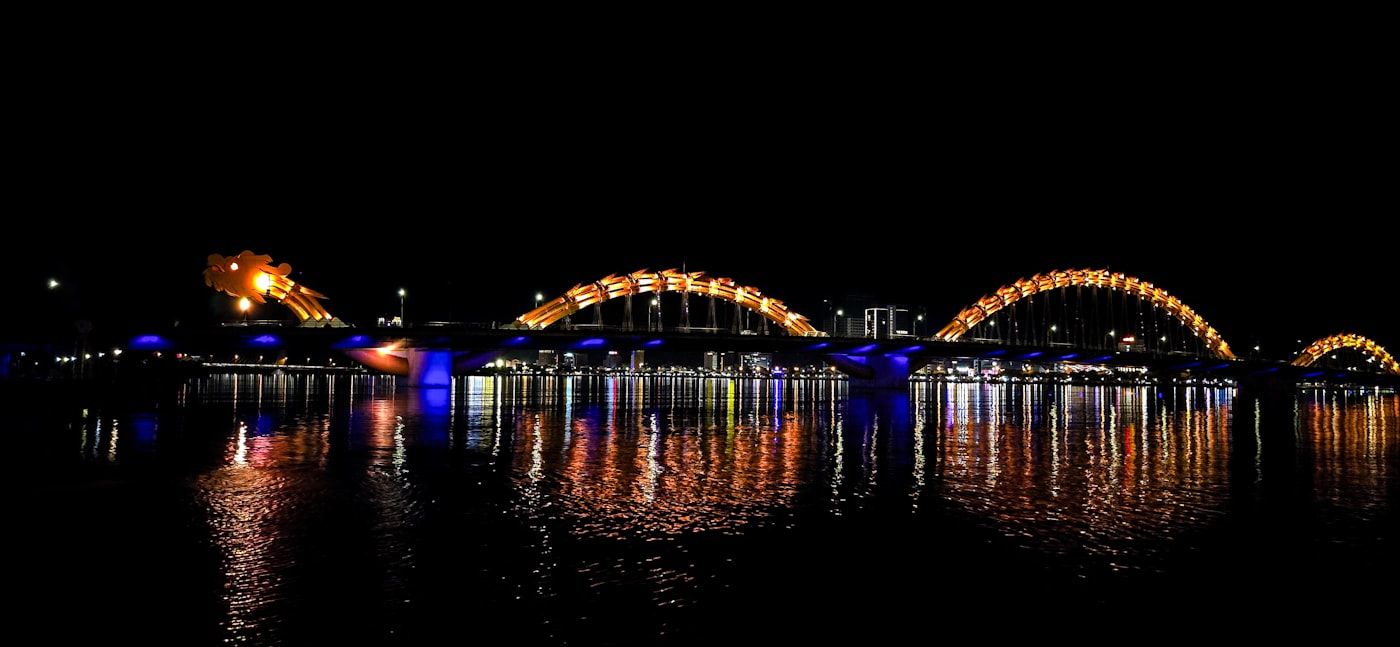
There's a stretch of central Vietnam where you can wake up to the sound of waves, spend an afternoon wandering streets that haven't changed in centuries, and end the day watching the sun set behind an emperor's tomb — all within an hour's drive of each other. Da Nang, Hoi An, and Hue sit close enough together to move between them with ease, yet each one feels like a different chapter of the country's story: a modern coastal city, a preserved trading port frozen in lantern light, and a royal capital still carrying the weight of its dynasty. A week here isn't about covering ground. It's about letting each place slow you down in its own way.
Days 1–2: Da Nang, Where the Trip Finds Its Footing
Da Nang eases you in. This is a city built around its beaches, and the first morning belongs to My Khe — soft sand, warm water, and the kind of stillness that resets a long flight. As the day opens up, climb into the clouds at Ba Na Hills, where the Golden Bridge appears to be cradled in two enormous stone hands, and the air turns cool enough for a jacket even in the height of summer. Back at sea level, the Marble Mountains offer a different kind of climb — a cluster of limestone peaks laced with hidden caves, pagodas, and shrines carved directly into the rock, best explored slowly, with time to sit in the cool dark of a cave temple and let your eyes adjust.
Save the evening for the Dragon Bridge. On weekend nights it breathes fire and water over the Han River to crowds gathered along the banks, but even on a quiet Tuesday, the bridge lit up against the night sky is worth the walk. Da Nang doesn't ask much of you in these first two days — just to arrive, unwind, and let the pace of the trip begin to shift.
Days 3–5: Hoi An, Where Time Slows to a Glow

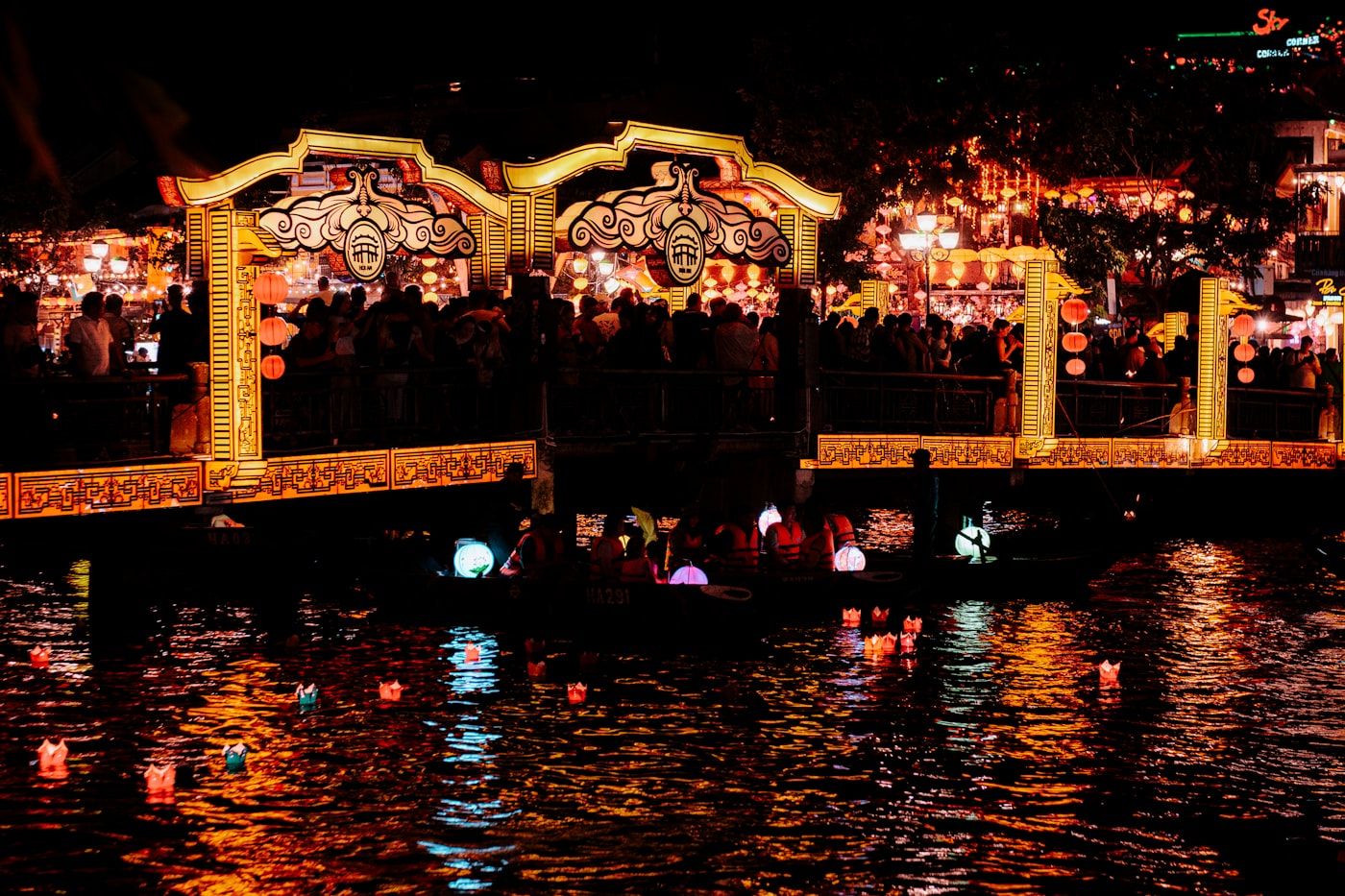
Thirty minutes south, Hoi An feels like stepping into another century. Its Ancient Town — a UNESCO World Heritage Site — is a tangle of yellow-walled shophouses, incense-scented temples, and a covered Japanese bridge that's stood for four hundred years. Walk it in the late afternoon, when the light turns golden and tailors call out from open doorways offering to have a suit ready by morning. Then come back after dark, when hundreds of silk lanterns flicker on above the streets and the whole town seems to glow from within.
Show Image
Spend a morning on the Thu Bon River in a round basket boat, weaving through coconut palm forests with a local rower who's done this a thousand times and still seems to enjoy it. Take a cooking class and learn why cao lau — a noodle dish found nowhere else in Vietnam — tastes the way it does, or hunt down a plate of white rose dumplings from a market stall that's been perfecting them for generations. On the full moon, the town extinguishes its electric lights entirely in favor of lanterns alone, and paper boats carrying candles drift down the river — one of the most quietly moving sights in the country, if the timing lines up. Hoi An rewards travelers who linger; three days here rarely feels like enough.
Days 6–7: Hue, Where the Empire Still Lingers
The road north to Hue climbs over the Hai Van Pass, one of the most spectacular drives in the country, with the coastline unfurling below in long curves of blue and green. Hue itself carries a different weight than Da Nang or Hoi An — this was the seat of the Nguyen Dynasty, Vietnam's last royal house, and the city still moves at the measured pace of a former capital. Spend a morning inside the Imperial City, a walled complex of gates, throne rooms, and courtyards modeled loosely on Beijing's Forbidden City, where faded gold and crumbling stone tell you as much about the passage of time as any placard could.
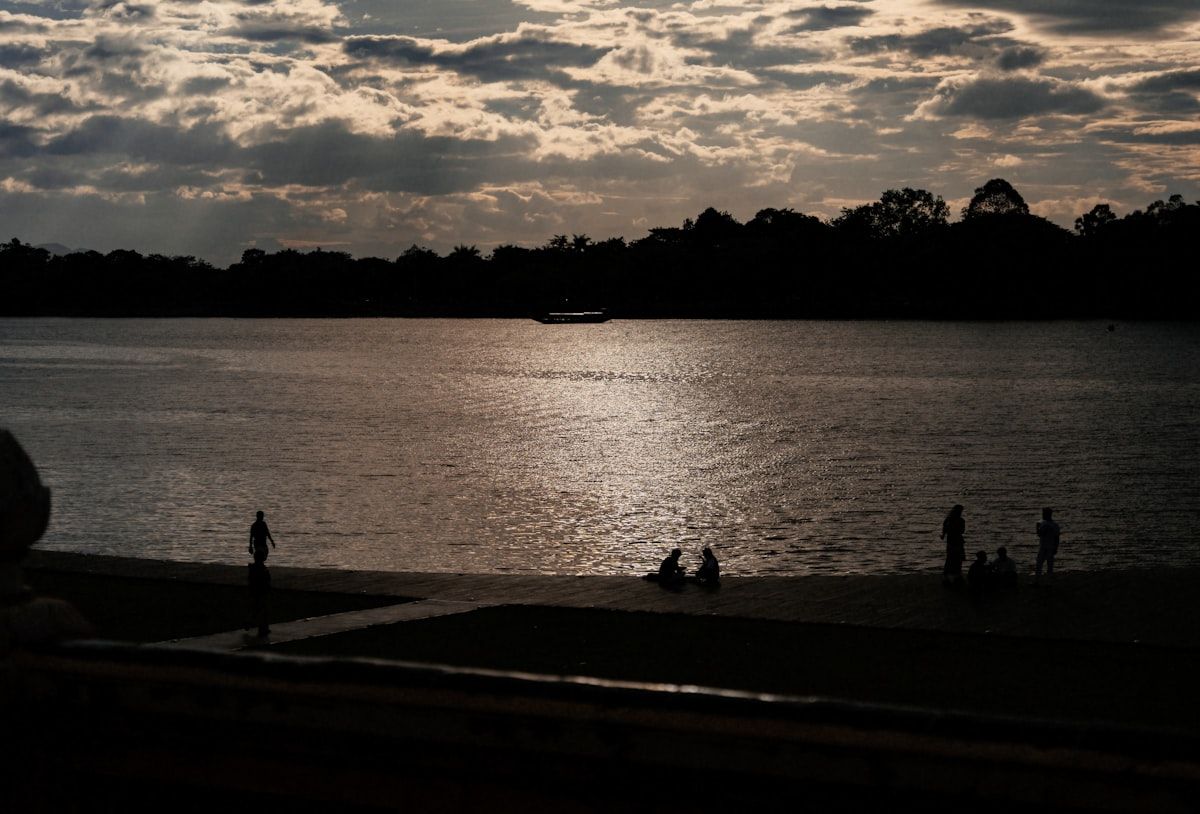
In the afternoon, take a boat along the Perfume River to the royal tombs scattered among the pine forests outside the city — each one a distinct architectural statement from a different emperor, some grand and formal, others surprisingly intimate. As evening falls, sit down to Hue's imperial cuisine: delicate, elaborately plated small dishes once prepared exclusively for the royal court, a fittingly refined final note for a week that started on a beach and ends in the quiet grandeur of a dynasty's last home.
Why This Week Works
What makes this route work isn't distance — it's contrast. Da Nang gives the trip its energy, Hoi An gives it its warmth, and Hue gives it its depth, and because all three sit within a couple of hours of each other along the coast, there's no wasted time getting between them. By the end of the week, you'll have swum in the sea, walked through centuries-old streets by lantern light, and stood inside the walls of an empire — three entirely different Vietnams, each one only a short drive from the last.